



1. Understanding the Great Tribulation
The Great Tribulation is the period of judgment Jesus described in Matthew 24. Many Christians expect it in the future, but Jesus placed its fulfilment within the generation He addressed. This series examines that first-century fulfilment through biblical prophecy and the historical events surrounding Jerusalem’s destruction.
We compare the prophecies of Jesus, Daniel and Revelation with the Jewish-Roman War, the destruction of Jerusalem and the Temple in 70 CE, and the wider chronology extending to Masada in 73 CE. This introductory lesson considers the timing of the Great Tribulation, the Abomination of Desolation, the spread of the gospel, Jerusalem’s judgment and Josephus as a historical source.
For then there will be great tribulation, such as has not been since the beginning of the world until this time, no, nor ever shall be.
Matthew 24:21 (NKJV)
In this series on the Great Tribulation, we’ll explore 22 key questions.
- When was the Great Tribulation?
- What was the Abomination of Desolation?
- Had the gospel been preached to all nations before the Great Tribulation?
- Why does Revelation compare Jerusalem to Sodom and Egypt?
- Who was Josephus, and is he a credible historian?
- What are the Seven Seals, the bowls and the trumpets?
- How do the Seven Seals relate to the Great Tribulation?
- Were one quarter and one third of the population killed, as Revelation describes?
- Who were the 144,000?
- Which armies crossed the Euphrates in Revelation?
- How long was the Great Tribulation—seven years or 2,300 days?
- Why did Jesus say His coming would be like lightning from the east to the west?
- When did the Great Tribulation begin?
- When did the Great Tribulation end?
- When did the Christians flee Jerusalem?
- How many people were killed during the Great Tribulation?
- What is the significance of the half hour of silence in heaven?
- When was the forty-two-month prophecy of Revelation fulfilled?
- What is the significance of the five-month prophecy in Revelation 9?
- What were Daniel’s 1,290- and 1,335-day prophecies about?
- What is Antioch’s importance in the prophetic calendar?
- What blessing was promised to those who reached 1,335 days?
In this lesson, we cover the first five questions.
2. What Is the Great Tribulation?
The Great Tribulation was the unique period of divine judgment upon Jerusalem and Judea foretold by Jesus. Its central catastrophe was the destruction of Jerusalem and the Temple in 70 CE. In the chronology adopted in this series, the wider period extends to the fall of Masada in 73 CE.
Several features define the Great Tribulation:
- It was a unique historical judgment that would never be repeated.
- It concerned Jerusalem and Judea specifically.
- It occurred within the generation to whom Jesus spoke.
- It involved both internal Jewish conflict and external Roman military judgment.
A. The Great Tribulation Will Never Occur Again
Jesus described the Great Tribulation as a unique event in history:
For then there will be great tribulation, such as has not been since the beginning of the world until this time, no, nor ever shall be.
Matthew 24:21 (NKJV)
The words “nor ever shall be” identify this as a singular judgment. Once fulfilled, the Great Tribulation cannot be repeated in another age. This does not mean that persecution, war, famine, or severe suffering would never occur again. Jesus was describing the particular judgment connected with Jerusalem and Judea.
B. When Would The Great Tribulation Occur?
Jesus placed a clear time limit upon the fulfilment of the Great Tribulation. His teaching in Matthew 24 is framed by two statements that identify the generation in which these events would occur. Before the Olivet Discourse, Jesus said:
Assuredly, I say to you, all these things will come upon this generation.
Matthew 23:36 (NKJV)
Then, after describing the Great Tribulation and the events associated with it, He repeated the same limitation:
Assuredly, I say to you, this generation will by no means pass away till all these things take place.
Matthew 24:34 (NKJV)
Jesus therefore placed the fulfilment within the lifetime of the generation to whom He was speaking. In our introductory lesson on eschatology, we considered the biblical association between a generation and forty years. Here, the decisive point is Jesus’ identification of “this generation”, rather than an exact forty-year calculation. The judgment belonged to His hearers’ generation and cannot be moved thousands of years into their future.
3. The Gospel Preached to All Nations
A. All Nations Would Hear the Gospel
Before His teaching on the Great Tribulation, Jesus gave another condition that had to be fulfilled before the end would come.
And this gospel of the kingdom will be preached in all the world as a witness to all the nations, and then the end will come.
Matthew 24:14 (NKJV)
If the Great Tribulation occurred in the first century, had the gospel already been preached throughout the world by then? The New Testament’s descriptions of the gospel’s spread help us understand this promise in its first-century setting.
B. Pentecost and the Language of the Nations
Luke describes the international gathering in Jerusalem on the Day of Pentecost:
And there were dwelling in Jerusalem Jews, devout men, from every nation under heaven.
Acts 2:5 (NKJV)
Luke uses expansive language to describe Jews gathered from many lands. The passage shows how biblical writers could speak of “every nation” in their historical setting. It does not, by itself, establish that every nation had already received the gospel.
C: Paul’s Teaching
Paul describes the gospel as already proclaimed in similarly universal terms:
If indeed you continue in the faith, grounded and steadfast, and are not moved away from the hope of the gospel which you heard, which was preached to every creature under heaven, of which I, Paul, became a minister.
Colossians 1:23 (NKJV)
Paul speaks of a proclamation that had already taken place. This supports our understanding that Matthew 24:14 could be fulfilled within the apostolic generation. His language describes the breadth of the gospel’s proclamation; it need not mean that everyone personally heard it.
D. The Testimony of Romans
Paul uses comparable language when writing to the Roman believers:
First, I thank my God through Jesus Christ for you all, that your faith is spoken of throughout the whole world.
Romans 1:8 (NKJV)
This verse concerns the widespread reputation of their faith. Near the end of the letter, Paul speaks more directly of the revelation of the gospel:
Now to Him who is able to establish you according to my gospel and the preaching of Jesus Christ, according to the revelation of the mystery kept secret since the world began but now made manifest, and by the prophetic Scriptures made known to all nations, according to the commandment of the everlasting God, for obedience to the faith.
Romans 16:25-26 (NKJV)
These statements support the first-century scope of Jesus’ prophecy. Paul nevertheless continued planning further missionary work, including a journey to Spain (Romans 15:20-24). Universal language about the gospel’s spread did not mean that all missionary work had ended.
E. Later Christian Testimony to the Apostolic Mission
Later Christian writers also described the apostolic mission in universal terms. Ancient Christian tradition identifies Clement of Rome with the Clement whom Paul names as a fellow worker in Philippians 4:3. Eusebius records this identification. 1
Clement describes Paul as teaching righteousness throughout the whole world and reaching the western limit. His language supports the breadth of the apostolic mission, although this retrospective account does not independently establish when Matthew 24:14 was fulfilled.2
Eusebius later used similar language:
“The voice of the inspired evangelists and apostles went forth through all the earth, and their words to the end of the world.”
Eusebius, Ecclesiastical History 2.3.1
He also names regions associated with individual apostles: Parthia for Thomas, Scythia for Andrew, Asia for John, and Pontus, Galatia, Bithynia, Cappadocia, and Asia for Peter.3
Together, these accounts show how early Christian writers described the apostolic mission’s extensive reach.
4. Abomination of Desolation
A. Let the Reader Understand
Jesus connected the approaching Great Tribulation directly with Daniel’s prophecy of the Abomination of Desolation:
“Therefore, when you see the ‘abomination of desolation,’ spoken of by Daniel the prophet, standing in the holy place” (whoever reads, let him understand), “then let those who are in Judea flee to the mountains.
Matthew 24:15-16 (NKJV)
The Gospel adds the parenthetical instruction, “whoever reads, let him understand.” The prophecy was intended to be understood and recognised when its fulfilment approached. Jesus gave His disciples a practical warning: when they recognised the sign, those in Judea were to flee.
B. Holy Place
Some futurist interpretations identify the “holy place” with the Holy of Holies in a future rebuilt Temple. Matthew’s expression does not specifically name the Holy of Holies, although it can refer to the Temple. The word topos means a place or location; it does not, by itself, establish the boundaries of the intended place.
We understand the expression in relation to Jerusalem and its sacred territory because of the context and Luke’s parallel account. Matthew describes the Abomination of Desolation standing in the holy place, while Luke describes Jerusalem surrounded by armies.
C. Armies Surrounding Jerusalem
“But when you see Jerusalem surrounded by armies, then know that its desolation is near. Then let those who are in Judea flee to the mountains, let those who are in the midst of her depart, and let not those who are in the country enter her. For these are the days of vengeance, that all things which are written may be fulfilled.
Luke 21:20-22 (NKJV)
Both accounts give the same instruction: those in Judea should flee. We therefore identify the Abomination of Desolation with the hostile military presence around Jerusalem that signalled its approaching desolation.
D. An Abomination of Lost Destiny
God called Israel to become a kingdom of priests and a holy nation, representing Him before the nations and revealing His plan of salvation to the world.
And you shall be to Me a kingdom of priests and a holy nation.’ These are the words which you shall speak to the children of Israel.”
Exodus 19:6 (NKJV)
However, Israel failed to fulfil its calling. Rather than faithfully proclaiming the God of Israel and preparing the nations for their coming Messiah, the nation repeatedly turned away from God and ultimately rejected Jesus Christ.
Throughout the Old Testament, God described His Covenant relationship with Israel as a marriage. He portrayed Israel as His wife but condemned her spiritual unfaithfulness as adultery.
“Bring charges against your mother, bring charges;
Hosea 2:2 (NKJV)
For she is not My wife, nor am I her Husband!
Let her put away her harlotries from her sight,
And her adulteries from between her breasts;
The desolation of Jerusalem therefore represented far more than a military defeat. The Gentile armies would plunder the city of the God of Israel, destroy His Temple, and bring disgrace upon a nation He had called to reveal His glory.
This was the tragedy of Israel’s lost destiny. God had not called Israel to suffer destruction at the hands of the Gentiles but to bring His salvation to them.
Nevertheless, Israel’s failure could not defeat God’s eternal purpose. Through Jesus Christ, God brought Jews and Gentiles together into one family, fulfilling His intention to have sons and daughters for Himself, a Bride for Christ, and a Temple for the Holy Spirit.
E. The Roman Armies
We understand Jesus’ imagery of the eagles gathering around the carcass as a picture of the Roman armies gathering against Jerusalem:
For wherever the carcass is, there the eagles will be gathered together.
Matthew 24:28 (NKJV)
Each Roman legion carried an aquila, the eagle standard representing its honour and identity. These pagan military emblems also carried religious significance, intensifying the sense of abomination associated with their presence in sacred territory.

Jerusalem was the carcass around which Rome’s eagle-bearing legions gathered. In 66 CE, the Roman advance under Cestius Gallus signalled the approaching desolation. His subsequent withdrawal gave those who heeded Jesus’ warning to flee an opportunity. Josephus records the advance and withdrawal.4
F. Babylon
In the Old Testament, God used the image of a great eagle to describe Nebuchadnezzar, king of Babylon, coming against Jerusalem.
‘Thus says the Lord GOD:
Ezekiel 17:3 (NKJV)
“A great eagle with large wings and long pinions,
Full of feathers of various colours,
Came to Lebanon
And took from the cedar the highest branch.
Ezekiel later identifies the eagle as the king of Babylon:
“Do you not know what these things mean? Tell them, ‘Indeed, the king of Babylon went to Jerusalem and took its king and princes, and led them with him to Babylon.'”
Ezekiel 17:12 (NKJV)
In 597 BCE, Nebuchadnezzar captured Jerusalem and carried King Jehoiachin and many of Judah’s leading citizens into captivity. This provides a significant prophetic parallel with Jesus’ warning that where the carcass is, the eagles will gather.
Just as Babylon’s eagle had descended upon Jerusalem, Rome’s eagle-bearing legions would gather against the city in the first century. In a later lesson, we will examine the relationship between Babylon, Rome, and the Beasts of Revelation.
5. Jerusalem Judged Like Sodom and Egypt
Revelation uses striking symbolic language to describe Jerusalem under judgment:
And their dead bodies will lie in the street of the great city which spiritually is called Sodom and Egypt, where also our Lord was crucified.
Revelation 11:8 (NKJV)
The city is identified as the place “where also our Lord was crucified”: Jerusalem. Its spiritual names, Sodom and Egypt, associate it with wickedness, opposition to God, and divine judgment.
These comparisons expose Jerusalem’s Covenant unfaithfulness. The city once called holy now bore the spiritual names of nations that had opposed God and experienced His judgment.
A. A Catastrophic Jewish Death Toll
The Great Tribulation brought extraordinary suffering and loss of life upon Jerusalem and Judea. Josephus describes widespread slaughter, famine, internal conflict, and the destruction of Jerusalem. He reports that 1,100,000 people died during the siege alone. Although the figure is disputed, his account remains a major source for the catastrophe.5
The destruction extended beyond Jerusalem as Roman forces suppressed Jewish resistance throughout Judea and the surrounding regions. We will examine Josephus’ figures and their relationship to Revelation’s judgments in a later lesson.
B. The Romans Believed God Was Fighting for Them
Josephus records that Vespasian recognised how internal fighting among the Jewish factions was weakening Jerusalem. While his officers urged him to attack, Vespasian argued that an immediate assault would unite the factions against Rome. Waiting would allow them to weaken one another. Josephus portrays him as saying that God was acting as the Romans’ general more effectively than he himself could.6
This parallels God’s earlier use of Babylon to judge Jerusalem. Internal conflict contributed to the city’s destruction before the Roman armies completed it in 70 CE.
C. Christ Fulfilled the Sacrificial System
The imagery of the carcass in Matthew 24:28 also possesses covenantal implications. Through His crucifixion, Jesus fulfilled the sacrificial framework of the Old Covenant and inaugurated the New Covenant.
having wiped out the handwriting of requirements that was against us, which was contrary to us. And He has taken it out of the way, having nailed it to the cross.
Colossians 2:14 (NKJV)
“But this Man, after He had offered one sacrifice for sins forever, sat down at the right hand of God.”
Hebrews 10:12 (NKJV)
Nevertheless, the Jewish priesthood continued offering sacrifices in the Temple. The carcass represents Jerusalem as the centre of this sacrificial order, which Christ fulfilled, while the eagles represent the Roman legions gathering to bring judgment.
D. The Old Covenant Was Ready to Vanish
In that He says, “A new covenant,” He has made the first obsolete. Now what is becoming obsolete and growing old is ready to vanish away.
Hebrews 8:13 (NKJV)
The writer distinguishes between the Old Covenant’s obsolescence and its approaching disappearance. Christ had already established the New Covenant, while the Temple and its sacrifices continued to function as outward institutions of the old order.
Their destruction in 70 CE made that passing clear. It did not establish the New Covenant, which Jesus had already inaugurated through His death and resurrection. The Temple’s destruction fulfilled His warning:
“Do you not see all these things? Assuredly, I say to you, not one stone shall be left here upon another, that shall not be thrown down.”
Matthew 24:2, excerpt (NKJV)
The Great Tribulation thus marked the historical end of the Temple system, which had become obsolete through Christ.
E. Destruction of Sodom
God destroyed Sodom because of its wickedness:
Then the LORD rained brimstone and fire on Sodom and Gomorrah, from the LORD out of the heavens.
Genesis 19:24 (NKJV)
Jesus compared the coming judgment on unrepentant Jewish cities with the judgment on Sodom (Matthew 10:15; 11:23-24). Revelation’s spiritual identification of Jerusalem with Sodom continues this pattern of comparison.
The parallel concerns wickedness and divine judgment; it does not require destruction in precisely the same manner. Jerusalem’s destruction in 70 CE fulfils this imagery.
F. Babylonian Judgment upon Egypt
Jeremiah foretold that God would use Nebuchadnezzar to judge Egypt:
… “Thus says the LORD of hosts, the God of Israel: ‘Behold, I will send and bring Nebuchadnezzar, the king of Babylon, My servant, and will set his throne above these stones that I have hidden. And he will spread his royal pavilion over them. When he comes, he shall strike the land of Egypt and deliver to death those appointed for death, and to captivity those appointed for captivity, and to the sword those appointed for the sword.'”
Jeremiah 43:10-11 NKJV, excerpt)
God’s description of Nebuchadnezzar as “My servant” shows that He could use a pagan king as His instrument of judgment. His use of Babylon against Egypt parallels His use of Rome against Jerusalem. This develops the theme of judgment through foreign armies, although Revelation 11:8 does not explicitly connect its designation of Jerusalem as “Egypt” with Jeremiah’s prophecy.
6. Josephus
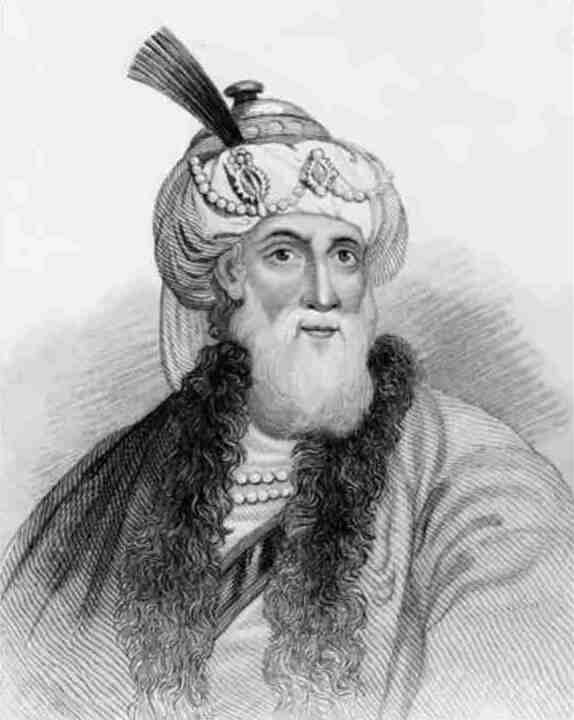
Josephus provides one of the most important historical accounts of the Jewish-Roman War and the destruction of Jerusalem. His writings allow us to compare these events with the prophecies of Jesus, Daniel, and Revelation.
Born in Jerusalem around 37 CE, Josephus belonged to a priestly family and received an extensive Jewish education. He commanded Jewish forces in Galilee during the war and later witnessed events surrounding Jerusalem’s siege from the Roman side. He recorded the conflict in The Jewish War.
Josephus was not a Christian and did not write to demonstrate the fulfilment of Jesus’ prophecies. Nevertheless, his accounts provide remarkable parallels with the events Jesus foretold.
We must distinguish between events he witnessed firsthand, information he obtained from others, and his own interpretations. We must also distinguish dates he explicitly recorded from those later historians reconstructed. Throughout these lessons, Scripture remains our primary authority for interpreting the Great Tribulation.
A. Josephus: A True Prophet
Josephus defended Jotapata against Vespasian’s Roman legions during the Galilean campaign of 67 CE. After a forty-seven-day siege, the Romans captured the city and took him prisoner. Josephus records that he then foretold Vespasian’s rise to imperial power while Nero still ruled.7
Scripture emphasises the importance of fulfilment when testing prophetic claims:
“As for the prophet who prophesies of peace, when the word of the prophet comes to pass, the prophet will be known as one whom the Lord has truly sent.”
Jeremiah 28:9 (NKJV)
“When a prophet speaks in the name of the Lord, if the thing does not happen or come to pass, that is the thing which the Lord has not spoken.” …
Deuteronomy 18:22 (NKJV, excerpt)
Jeremiah’s statement specifically concerns a prophecy of peace. Deuteronomy also teaches that a fulfilled sign is insufficient if its message leads people away from God (Deuteronomy 13:1-3). These passages require us to consider both fulfilment and faithfulness to God.
Suetonius records that Josephus, a prisoner of Vespasian, predicted that Vespasian would become emperor and release him from his chains.8 In 69 CE, Vespasian became emperor and ordered Josephus freed. Josephus records that, at Titus’ suggestion and with Vespasian’s agreement, his chains were cut apart.9

Although fulfilment alone does not establish that God sent a prophet, I regard this fulfilled prediction as supporting my recognition of Josephus as a true prophet. This does not place his writings on the same level as Scripture or establish the accuracy of every historical detail he records.
B. Similarity to Prophet Jeremiah
Jeremiah warned Judah that God would use Babylon to judge the nation and urged the people to surrender. After Jerusalem fell in 586 BCE, Nebuchadnezzar ordered his officers to protect him:
Now Nebuchadnezzar, king of Babylon, gave charge concerning Jeremiah to Nebuzaradan, the captain of the guard, saying, “Take him and look after him, and do him no harm; but do to him just as he says to you.”
Jeremiah 39:11-12 (NKJV)
Josephus’ experience provides a parallel: he too recognised the conquering power’s role in Jerusalem’s judgment and received protection from its ruler. Daniel offers a further comparison, as foreign rulers recognised his prophetic gift and elevated him to positions of influence.
These parallels illustrate God’s preservation of witnesses amid judgment. They do not make the three men’s ministries identical.
These similarities reinforce the prophetic pattern. God used Babylon to judge Jerusalem under the Old Covenant and Rome to judge Jerusalem during the Great Tribulation. In both periods, He preserved witnesses who recognised the approaching judgment.
Josephus therefore occupies a remarkable position in the history of Jerusalem’s destruction, paralleling the experiences of Jeremiah and Daniel.
C. Did Josephus Exaggerate?
Some historians question the accuracy of Josephus’ casualty figures for the Jewish-Roman War, particularly his claim that 1,100,000 people died during the 70 CE siege of Jerusalem.10
To explain how Jerusalem could contain so many people, Josephus appeals to an earlier Passover count requested by Cestius Gallus. He reports 256,500 sacrifices and notes that at least ten people shared each sacrifice, with some groups numbering twenty.11 He then explicitly calculates a total using ten diners per sacrifice, giving 2,700,200 participants in the translation used here. Yet 256,500 multiplied by ten is 2,565,000. The reported calculation therefore contains a numerical discrepancy. Larger groups do not explain this particular mismatch, because the stated calculation uses ten per sacrifice.
The sacrifice count, the calculated festival population, and the siege death toll are distinct claims. The census helps explain Josephus’ reasoning, but it is not independent verification of his casualty figure. Nor does a count from an earlier Passover establish how many people were present in 70 CE.
The influx of pilgrims is nevertheless relevant: Josephus describes festival crowds trapped in Jerusalem during the siege. We should weigh his figures against the available historical evidence, recognising both the importance of his testimony and the limits of these numerical claims.
7. Summary
The Great Tribulation was the unique judgment upon Jerusalem and Judea foretold by Jesus. Jerusalem’s destruction in 70 CE was its central catastrophe; the wider chronology adopted in this series extends to Masada in 73 CE.
We have learned that:
- Jesus placed the judgment within the generation to whom He spoke and declared that such a tribulation would never occur again.
- The New Testament’s descriptions of the gospel’s spread help us understand Matthew 24:14 in its first-century setting. Later Christian writers also described the apostolic mission in universal terms.
- The Abomination of Desolation was the Roman military presence around Jerusalem. Cestius Gallus’ advance and withdrawal in 66 CE provided a warning and an opportunity to flee.
- God used Rome to judge Jerusalem, paralleling His earlier use of Babylon.
- Revelation spiritually identifies Jerusalem as Sodom and Egypt, associating the city with wickedness and divine judgment.
- Christ established the New Covenant through His death and resurrection. The Temple’s destruction removed the remaining sacrificial institutions of the old order.
- Josephus provides essential historical testimony. His fulfilled prediction about Vespasian supports my view of him as a true prophet, though his historical claims still require examination.
The Great Tribulation belonged to the generation Jesus addressed. In the following lessons, we will examine the Seven Seals of Revelation, the 144,000, the prophetic time periods, and the historical events that identify their fulfilment.
AI Assistance Disclosure
Most of the research and writing for this lesson was prayerfully undertaken by Dr Neville Westerbeek van Eerten. AI tools assisted with editorial review and checks of consistency, references and chronology. Some wording and illustrations were developed with AI assistance. The author reviewed the final material and retains responsibility for its interpretations, accuracy and conclusions.
Historical and Scholarly References
- Eusubius, Ecclesiastical History 3.4.10. ↩︎
- Eusebius, Ecclesiastical History 3.4.10. ↩︎
- Clement of Rome, 1 Clement 5.5-7. ↩︎
- Josephus, The Jewish War 2.19 (2.527-545), especially the advance on Jerusalem and subsequent withdrawal. ↩︎
- Josephus, The Jewish War 6.9.3 (6.420) ↩︎
- Josephus, The Jewish War 4.6.2 (4.368-370) ↩︎
- Josephus, The Jewish War 3.8.9 (3.399-408) ↩︎
- Suetonius, The Twelve Caesars, Vespasian 5.6 ↩︎
- Josephus, The Jewish War 4.10.7 (4.623-629). ↩︎
- Josephus, The Jewish War 6.9.3 (6.420) ↩︎
- Josephus, The Jewish War 6.9.3 (6.422-427) ↩︎
© Use by Permission Awakening Impact Ministries / Dr Neville Westerbeek van Eerten D.Miss, 2027